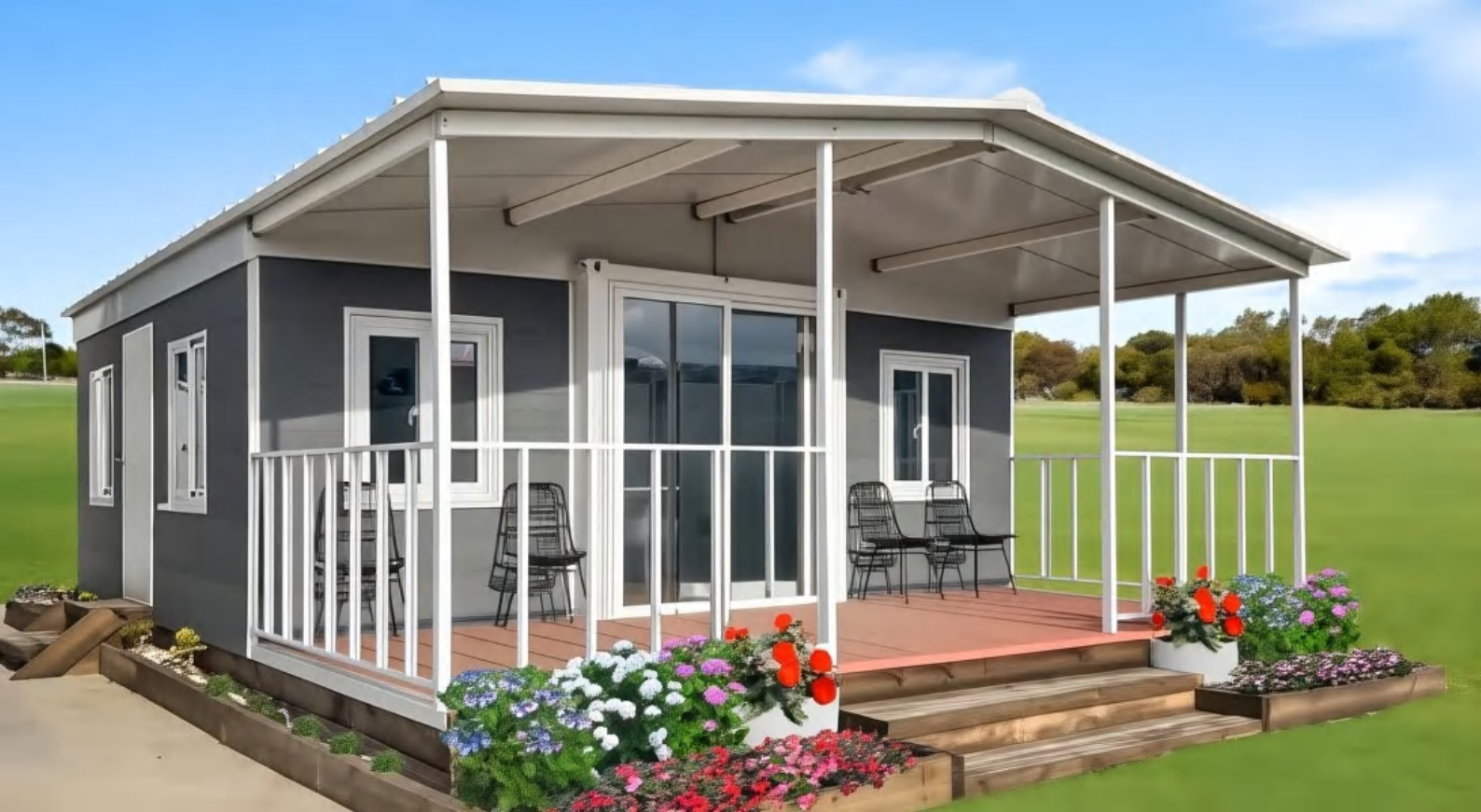
Connecticut legalized ADUs statewide in 2021 — but two-thirds of towns opted out, so your address decides everything. The modular unit is factory-inspected to the state code. Here's the real 2026 path for Fairfield County, the shoreline and beyond.
Connecticut searches come mostly from Fairfield County (NYC-commuter towns) and the shoreline, plus the Hartford and New Haven areas. Connecticut's ADU story has a big catch — it legalized ADUs statewide, then let towns opt out, and most did. So in Connecticut, your town matters more than the state.
The short version: ADUs are as-of-right only in towns that didn't opt out (about a third); the building is factory-inspected to the state code; and the shoreline is a wind-and-flood problem.
The ADU catch: HB 6107 and opt-outs
- HB 6107 (2021) legalized ADUs as-of-right statewide — attached/detached, up to 1,000 sq ft or 30% of the home.
- Towns could opt out by Jan 1, 2023 — and more than two-thirds did (~115 of 169; ~54 kept the state standard).
- Opting out ≠ ban — the town wrote its own rules (stricter or looser).
Step one in Connecticut is always: did my town opt out, and what's its ordinance?
The building: CT State Building Code
- Units are built to the Connecticut State Building Code and factory-inspected by an approved third-party agency.
- The local building official handles the on-site certificate of occupancy.
- Your local permit covers foundation, utilities, and zoning.
The site: snow inland, coast on the Sound
- Inland / northwest hills. Snow load and cold.
- Shoreline (Long Island Sound). Coastal wind and FEMA flood elevation.
- Seismic. Low.
The spec is set from your site at order time.
Realistic timeline
- Factory: third-party plan review + in-plant inspection, in parallel with site work.
- Local: a site/building permit for foundation and utilities, plus the town's ADU rules (as-of-right or town-specific).
- Set + finish: foundation (frost-depth inland, pilings on the coast), set, tie-ins, final inspection.
With the structure built off-site, a turnkey Connecticut project can reach handover in roughly four months.
Find your situation
Fairfield County ADU. Confirm opt-out status; where allowed, high-cost demand makes the ADU compelling.
Shoreline cottage. Engineer for coastal wind and flood elevation.
Northwest hills cabin. Snow drives the unit.
Workforce / hospitality. Multi-unit production runs in parallel with site work, all to the CT State Building Code.
How PSL Modular fits
We build to the Connecticut State Building Code, factory-inspect through an approved third-party agency, and hand your local building official a unit that needs only site approval. Snow/cold envelopes and coastal wind/flood are engineered to your site; UL-listed electrical, ASTM E84 Class A cladding, and pile/helical foundations included. Turnkey from quote to handover in roughly four months.
Next step: tell us your town and site; we'll check its ADU opt-out status, spec the envelope, and send a real quote.
Sources
- Connecticut DAS — Office of the State Building Inspector; Connecticut State Building Code (portal.ct.gov)
- Connecticut General Assembly — HB 6107 / Public Act 21-29 (2021); CT Mirror opt-out reporting
- FEMA coastal flood maps (Long Island Sound)
This guide is general information, current as of 2026, not legal advice. Confirm specifics with your town and the CT Office of the State Building Inspector.
[ CONNECTICUT STATE COVERAGE ]
Building in Connecticut? See your one-page coverage summary.
The verdict, building-approval path, ADU law, and structural spec for Connecticut — at a glance — with a link to a parcel-specific quote.
Frequently Asked Questions
Are ADUs allowed by-right in Connecticut?
It depends entirely on your town. HB 6107 (Public Act 21-29, 2021) made ADUs as-of-right statewide — attached or detached, up to 1,000 sq ft or 30% of the primary dwelling — but towns could opt out by January 1, 2023, and more than two-thirds did. About 54 towns kept the state as-of-right standard; roughly 115 opted out and wrote their own (stricter or looser) rules. So the first thing to confirm is whether your town opted out and what its current ADU ordinance says.
What does it mean that my town 'opted out'?
It does not mean ADUs are banned. Opting out simply means the town declined the state's default as-of-right standard and adopted its own ADU regulations, which may require a special permit or set different size/parking rules — or may actually be more permissive. Check your town's specific ordinance.
Who inspects a modular building in Connecticut?
Modular units are built to the Connecticut State Building Code and factory-inspected by an approved third-party inspection agency; the local building official, under the Office of the State Building Inspector framework, handles the on-site approval and certificate of occupancy. Your local permit covers the site work — foundation, utilities, zoning.
What site factors matter most in Connecticut?
Snow and cold inland (the northwest hills carry the heaviest loads), and along the Long Island Sound shoreline, coastal wind and FEMA flood elevation. Seismic risk is low. PSL Modular sets the envelope and any coastal/flood spec from your site.
Is modular good for a Fairfield County ADU?
Yes — Fairfield County's high housing costs (and NYC-commuter demand) make a rentable ADU compelling where the town allows it. First confirm your town's opt-out status and rules; then the factory-inspected unit moves quickly through local permitting.