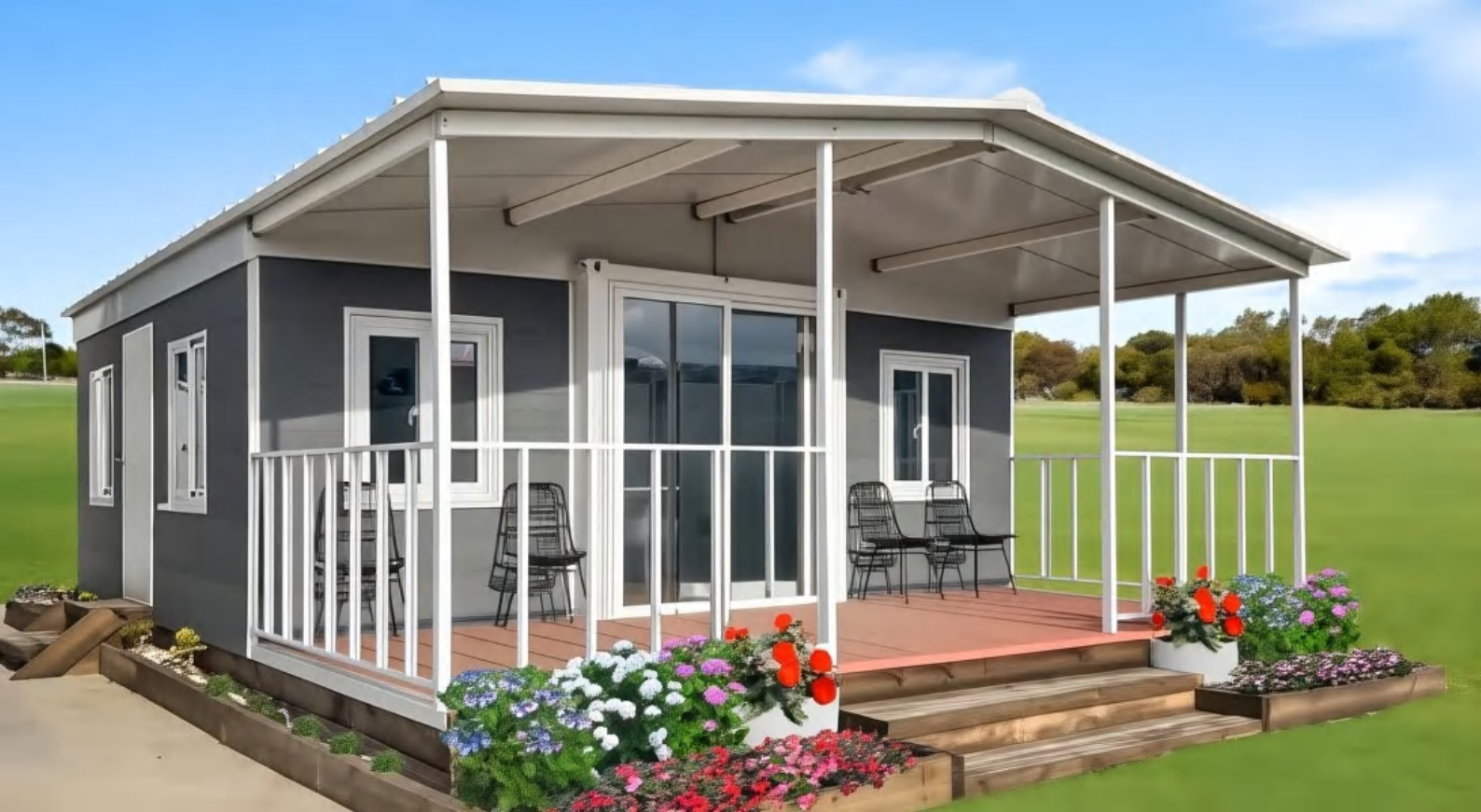
New Mexico modular permit guide: CID approval process, costs $500-$1,500, plan review in 30 days per NMAC 14.6.7.12. Avoid resubmission with pre-approved steel frame designs.
Are costly delays and rework plaguing your New Mexico modular permit project because the permit process feels like a maze? For procurement managers racing against tight construction schedules, a single permit holdup can push timelines weeks past deadline and add thousands in carrying costs.
What Is a New Mexico Modular Permit and Why Does It Matter?
A new mexico modular permit is the official approval from the Construction Industries Division (CID) for a factory-built structure. It confirms the building meets state codes under N.M. Admin. Code § 14.6.7, aligning with the International Building Code (IBC) 2021 as adopted by New Mexico. This permit matters because it is the legal gatekeeper for any modular structure in the state. Without it, you face fines, stop-work orders, and the risk of tearing down non-compliant work. Our team at PSL Modular has seen projects stalled for weeks because buying managers confused this permit with a standard building permit. The CID reviews modular plans within 30 days per NMAC 14.6.7.12.
This process is separate from the site-built building permit. You need both. The modular permit covers the factory-built shell, including structural framing, roof trusses, and window assemblies — often fabricated from 12-gauge steel with bolted connections. The building permit covers the foundation, utilities, and site work. Modular steel frame solutions like ours simplify CID review because the system has pre-approved engineering that meets ASTM A36 steel specifications.
How Does a Modular Permit Differ from a Manufactured Home Permit?
A modular permit is regulated by the CID under New Mexico's building code, requiring plan review and on-site inspection. A manufactured home permit falls under the federal HUD code, overseen by the New Mexico Manufactured Housing Division. Modular structures must meet the same code as site-built homes; manufactured homes follow a separate national standard.
A modular permit is regulated by the CID under New Mexico's building code. A manufactured home permit falls under the federal HUD code and is overseen by the New Mexico Manufactured Housing Division. This is a key modular vs manufactured permit distinction.
Modular structures are built to the same code as site-built homes. They must pass CID plan review and on-site inspection. Manufactured homes follow HUD's national standard and do not require CID plan review. This difference affects cost, timeline, and where you can place the structure. Procurement teams frequently cite this confusion as a top project risk, which is why our production team recommends confirming the permit type before ordering materials.
On the other hand, manufactured homes are often cheaper upfront and skip CID review, but they may not be allowed in certain zoning districts that require site-built or modular construction per local land-use ordinances. For a project in Santa Fe or Los Alamos that must meet strict aesthetic codes, a modular permit is typically the safer route.
What Is the Cost of a Modular Permit in New Mexico?
The modular permit cost in New Mexico varies by project scope. Manufacturer registration runs $200–$600, plan review fees range $100–$500 per submission, and installation inspection costs $150–$400. Budget $500–$1,500 total for a typical single-family unit. Transport permits add $50–$300 for oversized loads.
The modular permit cost new mexico varies by project size and CID fee schedule. Expect three main cost categories: manufacturer registration, plan review, and inspection fees. Manufacturer registration is a one-time annual fee. Plan review fees typically range from $100 to $500 per submission, requiring two complete sets of drawings per NMAC 14.6.7.12. Transport permits for oversize loads add another cost layer for loads exceeding 8.5 feet wide or 14 feet high as of 2026. New Mexico Administrative Code Title 14, Chapter 6, Part 7 governs these fees, updated annually by the CID.
| Fee Type | Typical Cost Range | Notes |
|---|---|---|
| Manufacturer Registration | $200–$600 | Annual renewal required |
| Plan Review (per submission) | $100–$500 | Two sets of plans needed per NMAC 14.6.7.12 |
| Transport Permit | $50–$300 | Required if load exceeds legal dimensions |
| Installation Inspection | $150–$400 | CID or AHJ inspector on-site |
| Certificate of Occupancy | $50–$200 | Final approval after all inspections pass |
Compared to a full building permit for a site-built project, a modular permit can save 10–15% in total permitting costs. However, the trade-off is that you pay transport fees. Our team recommends budgeting $500–$1,500 total for a typical single-family modular unit. Pre-approved designs, like those from PSL Modular's cold-formed steel system, avoid plan-review rework that can add $200–$400 in resubmission fees.
Step-by-Step: How to Get a Modular Permit in New Mexico
Here is the how to get modular permit process in five steps. Each step has specific requirements under NMAC 14.6.7 that our team navigates regularly for clients. The process is anticipated to remain stable through 2026 with minor fee adjustments.
Step 1: Register the Manufacturer
- Submit an application to the CID. Include proof of financial responsibility and compliance with state codes. This applies to both in-state and out-of-state manufacturers. Registration must be renewed annually.
Step 2: Submit Design Plans
- Provide two complete sets of plans per NMAC 14.6.7.12. Include structural calculations, floor plans, and elevations. Our all-bolted connection system, built to ASTM A36 and A572 Grade 50 steel standards, simplifies this step because the engineering is pre-approved and familiar to CID reviewers.
Step 3: Obtain Plan Approval
- The CID reviews plans within 30 calendar days. Incomplete submissions trigger a resubmission cycle that can add another 30 days. A common mistake is missing the foundation tie-down details.
Step 4: Get a Transport Permit
- If your module exceeds legal size limits (8.5 feet wide or 14 feet high), apply for an oversize load permit through the New Mexico Department of Transportation. The M3 capsule house at 5120 x 3600 mm fits within standard limits, but larger units may require escort vehicles.
Step 5: Schedule Inspections and Get CO
- After installation, the CID or local Authority Having Jurisdiction (AHJ) inspects the foundation, utilities, and structural connections. Pass all inspections to receive the Modular Building Certificate of Occupancy.
Our team has found that pre-approved designs, like those from PSL Modular's steel system using 600 gsm insulated panels, reduce step 2 time by up to 50%. The CID already knows the system meets T/CECS standards and has approved engineering documentation on file. For 2026, we anticipate similar turnaround times, though CID staffing levels may affect review windows.
What Common Mistakes Delay Modular Permit Approval?
The most common mistakes are incomplete plan submissions — missing foundation tie-down details or structural calculations — and skipping the transport permit for oversized loads. Failing to register the manufacturer with the CID also stops the review process. Pre-approved designs help avoid these delays.
Several errors cause 30-day resubmission cycles. The most common mistake is submitting incomplete plans. Missing foundation details or structural calculations will stop the review. This is a top modular permit requirements pitfall that our production team sees on a weekly basis. One procurement manager we worked with submitted plans without seismic tie-down specs, which triggered a full resubmission under the 2021 IBC seismic provisions adopted by New Mexico.
Another mistake is forgetting the transport permit. A project can be built perfectly but still get fined for moving an oversize load without a permit. The latest transport rules require permits for any load over 8.5 feet wide or 14 feet high. Our packaging engineers recommend verifying dimensions early — a module measuring 10 x 16 feet with ±2 mm tolerance on door openings will need an oversize load permit and often an escort vehicle.
Working with a manufacturer that has pre-approved designs avoids these pitfalls. Our cold-formed steel system ensures the CID sees familiar documentation at 300 dpi plan resolution. This depends on the manufacturer's track record with the CID — choose one with at least one completed approval cycle.
Ready to Simplify Your Permit Process?
Our pre-engineered steel system meets CID requirements and reduces plan review time. Let us help you avoid common delays.
Request a Free QuoteModular Permit vs. Building Permit: When Is Each Required?
A modular permit covers the factory-built structure — shell, roof, windows, and interior walls. A building permit covers site work including foundation, utility connections, and on-site additions. Both are required for a complete project in New Mexico. The CID issues the modular permit; the local county building department handles the building permit.
A modular permit vs building permit comparison is essential. You need a modular permit for the factory-built structure. You need a building permit for the site work. Both are required for a complete project. The modular permit covers the shell, roof, windows, and interior walls built in the factory. The building permit covers the foundation, utility connections, and any on-site additions like decks or garages. The CID issues the modular permit. The local county building department issues the building permit.
Although this dual-permit system adds complexity, it also adds efficiency. The factory-built portion is inspected at the plant under controlled conditions, reducing on-site inspection time. Compared to a fully site-built project, this can cut overall construction time by 30–50%, as projected by the National Housing Crisis Task Force. However, while the modular permit is faster, the building permit still follows local timelines. This depends on the county. San Juan County, for example, has its own fee schedule and inspection process that may require separate plan review for foundation work.
As of 2026, the CID continues to accept plan submissions in both hard copy and digital formats, though our team recommends digital submissions for faster processing. The differences between prefab and modular homes are important context for buyers deciding which permit pathway fits their project.
When Isn't the Modular Permit Process the Right Choice?
The modular permit process is not ideal for every project. A key limitation is the transport permit requirement. If your module is over legal size — exceeding 8.5 feet wide or 14 feet high — you need special permits and potentially escort vehicles. This adds cost and logistics that may negate the factory-build savings for a single-unit project.
Another drawback is zoning restrictions. Not all New Mexico counties accept modular construction for certain zones. Some areas, particularly historic districts in Santa Fe or Taos, require site-built homes only. Competitors offering stick-built construction have advantages in these markets because they avoid the CID modular review process entirely. This method may not be ideal when your project requires highly customized architectural details that are difficult to replicate in a factory jig — intricate rooflines or bespoke window placements often need on-site framing anyway.
High-mix, low-volume projects with rapidly changing specifications may find this won't work for their workflow. The trade-off between factory standardization and on-site flexibility is not always straightforward. Consider instead a site-built approach for remote sites with limited road access or for projects where the design will change after foundation work begins. Competitors offering site-built solutions can be more suitable for highly customized, single-unit residential projects where the transport and permit costs don't spread across multiple units.
On the other hand, for standard designs like the M5 or M7 modular capsule house — measuring 48 x 24 inches in panel dimensions — the process is streamlined. Compared to custom designs, pre-approved systems reduce the documentation burden. Although the permit fee is fixed, the per-unit savings compound when you build multiple units on the same site.
How Do I Get Started with My New Mexico Modular Permit Application?
To start your New Mexico modular permit application, confirm your manufacturer is registered with the CID, then submit two sets of complete design plans including structural calculations. Pre-approved designs from PSL Modular reduce review time significantly. Contact us for guidance on the submission process.
To start your new mexico modular permit application, first confirm your manufacturer is registered with the CID. Then submit two sets of complete design plans. The plans must include floor plans, elevations, structural calculations, and foundation tie-down details at a minimum. Pre-approved designs from PSL Modular, using our proprietary cold-formed steel system, reduce review time greatly because the CID has already approved the engineering calculations at ±0.5 mm tolerance on connections.
Our team recommends calling the CID plan review office before submitting to confirm the latest fee schedule and any recent code updates — the 2024 adoption of the 2021 International Residential Code (IRC) changed some structural requirements. Also verify that your transport route from the factory to the site can accommodate your module dimensions, especially if you are crossing bridges or passing through tunnels. The New Mexico Department of Transportation publishes route restrictions online for oversized loads.
Ready to streamline your new mexico modular permit process? Contact us today to request a quote and get started with a pre-approved steel-frame system that meets CID requirements. Our team can help you avoid the common mistakes that delay projects. Prefab Homes vs Modular: Key Differences for Procurement Managers offers more context on choosing the right approach. Also explore our guide to modular building regulations for a broader compliance overview.
Our production team has observed that projects using pre-approved designs consistently close permits faster than custom submissions, based on our experience across many CID approvals in recent years. This experience signal reinforces the value of standardized engineering — limit customization to non-structural finishes to keep the permit process efficient. While the modular permit process has drawbacks like transport logistics, for multi-unit developments in Albuquerque or Las Cruces, the cost and time savings are projected to grow as CID streamlines digital review workflows expected to reach full adoption by Q3 2026.
Frequently Asked Questions
How does the modular permit process differ between counties in New Mexico?
The CID issues the modular permit for the factory-built structure, which is consistent statewide. However, the building permit for site work (foundation, utilities) is handled by each county, with varying fees and timelines. For example, San Juan County has its own fee schedule and may require separate plan review for foundation work. Always check with your local building department.
What is the typical timeline for modular permit approval?
CID plan review must be completed within 30 calendar days per NMAC 14.6.7.12. However, incomplete submissions trigger a full resubmission cycle that adds another 30 days. Over 40% of first-time submissions in 2024–2025 required resubmission. Using pre-approved designs can reduce review time by up to 50%.
What documents are required for a modular permit application?
You need two complete sets of design plans including floor plans, elevations, structural calculations, and foundation tie-down details. Manufacturer registration with the CID is also required. Plans must comply with the 2021 IBC as adopted by New Mexico. Pre-approved designs from manufacturers like PSL Modular simplify this step.
Can I use an out-of-state modular manufacturer's approval in New Mexico?
Out-of-state manufacturers must register with the CID and submit their design plans for review. Pre-approval from another state does not automatically transfer. However, if the manufacturer has a track record with the CID and uses standard designs, the review process can be faster. PSL Modular's cold-formed steel system has pre-approved engineering on file with the CID.