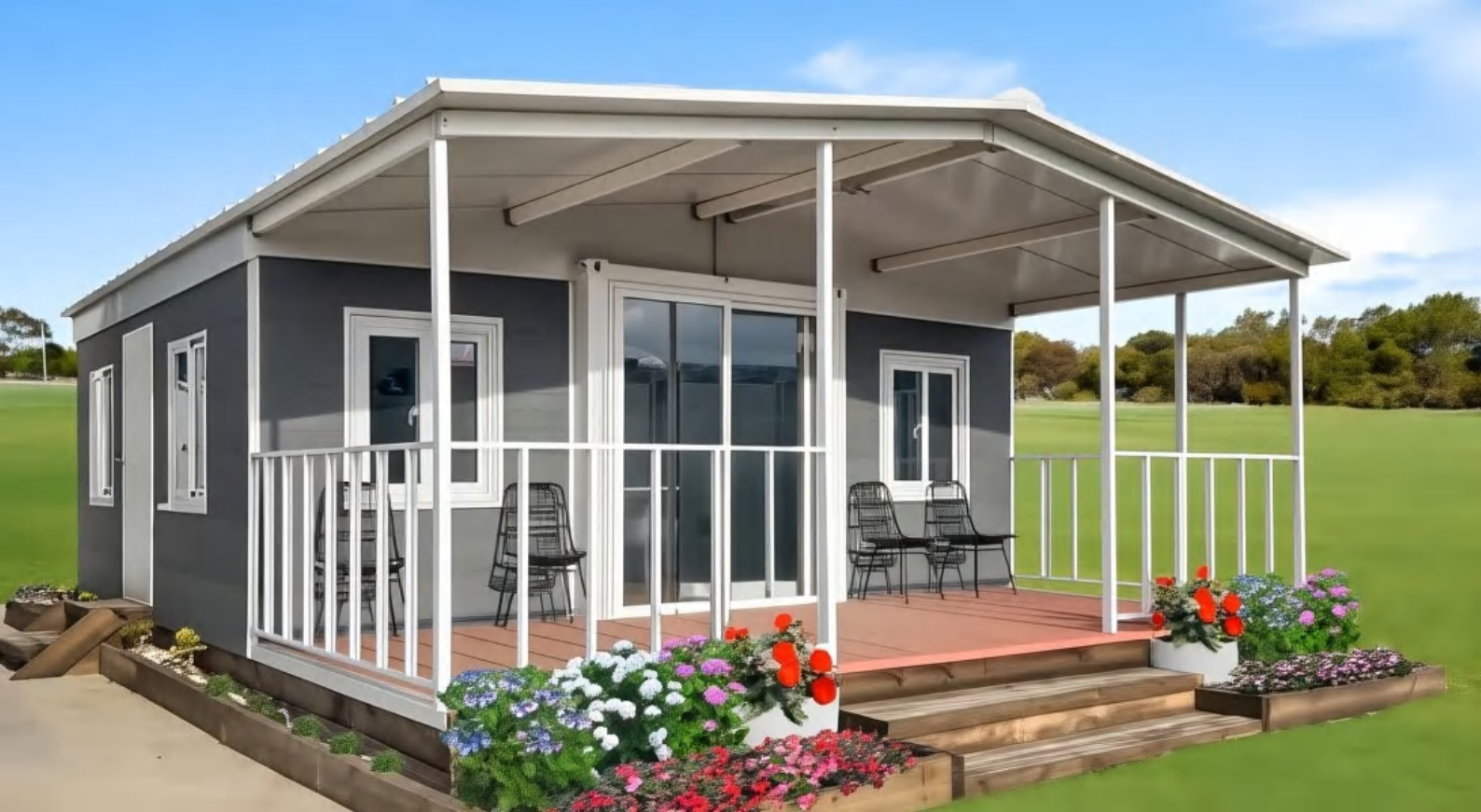
Florida just made the backyard ADU a statewide right (SB-48), and the state's modular program ships your unit with a DBPR insignia. The one thing that decides everything here: the Florida Building Code wind and flood rules. Here's how it all fits in 2026.
If you're searching this in Florida, you're probably one of three people: a homeowner adding an in-law suite or rental ADU, an operator building a glamping or RV resort or hospitality project, or a developer working workforce or 55+ housing. Florida just got friendlier for the first group — a 2026 law made the backyard ADU a near-statewide right — and the modular path serves all three. But in Florida one thing outranks everything else: the wind.
The short version: the state approves the building and ships it with a DBPR insignia, cities can no longer ban your ADU, and the real engineering question is meeting the Florida Building Code's wind and flood rules — strictest of all in the Miami-Dade/Broward HVHZ.
The building: DBPR Manufactured (Modular) Buildings Program
Florida regulates factory-built construction through the Department of Business and Professional Regulation (DBPR) under Rule 61-41 F.A.C. (the program moved from the old DCA Rule 9B-1):
- DBPR approves the plans against the Florida Building Code.
- An approved agency inspects the unit at the factory.
- A state insignia — department name, state seal, unique ID — is affixed before the unit leaves the plant, along with a manufacturer's data plate.
- Your local building department permits the site work (foundation, utilities, elevation) but does not re-review the structure.
Same advantage as every state with a modular program: the structural review happens once, at the state level.
The ADU opening: SB-48 (2026)
Florida's 2026 ADU law, SB-48, amends Fla. Stat. §163.31771 and sets a statewide floor that's genuinely useful to investors and families:
- Cities cannot ban ADUs in single-family residential zones.
- Cities cannot cap ADUs below 1,000 sq ft.
- Cities cannot impose blanket owner-occupancy requirements.
What cities keep: setbacks, height, design standards, short-term-rental rules, and impact fees. Local ordinances are rolling out through 2026, so confirm your city — but the direction is clearly toward more in-law suites and rentable backyard units.
The thing that decides everything: wind (and flood)
Florida's structural envelope is the project. Two drivers:
- Wind. Everything is built to the Florida Building Code's high design wind speeds. In the High-Velocity Hurricane Zone (Miami-Dade and Broward), requirements jump to the toughest in the country — windows, doors, cladding and roofing need specific product approvals (e.g. Miami-Dade NOAs). This is a factory-order decision, not a field fix.
- Flood. In FEMA flood zones the lowest floor must be elevated to the base flood elevation, driving a piling/elevated foundation and affecting utilities, access and cost.
Get these specified up front and the unit arrives compliant and insurable; get them wrong and you can't close.
Realistic timeline
- Factory (DBPR track): plan approval + build + inspection + insignia, in parallel with site work.
- Local: a site/building permit for foundation, elevation, and utilities, plus any ADU/zoning standards. With SB-48, the ADU use is broadly allowed.
- Set + finish: foundation (often pilings in flood or coastal areas), set, tie-ins, final local inspection.
With the structure built off-site, a turnkey Florida project can reach handover in roughly four months.
Find your situation
In-law suite / backyard rental (Tampa, Orlando, Jacksonville, South Florida). SB-48 is your green light. Confirm your city's setbacks, height and STR rules, then the DBPR-insignia'd unit moves quickly.
Coastal / HVHZ lot (Miami-Dade, Broward, the Keys). Wind and flood spec dominate. The unit must be engineered to HVHZ product-approval standards and elevated to base flood — both set at the factory order.
Glamping / RV resort. The cabins clear via DBPR; your work is county land-use, flood, and septic/water. Build to the FBC wind standard regardless of how 'temporary' the use feels.
Hospitality / 55+ / workforce. Multi-unit factory production runs in parallel with site work — the model that makes modular pencil at Florida's scale, all to one wind standard.
How PSL Modular fits
We build to the Florida Building Code, run the unit through DBPR plan approval and factory inspection for the insignia, and engineer wind and flood to your exact site — HVHZ product approvals and base-flood elevation where required. UL-listed electrical, ASTM E84 Class A cladding, and pile/elevated foundations included. Turnkey from quote to handover in roughly four months.
Next step: tell us your county and whether you're in the HVHZ or a flood zone, and we'll send a parcel-specific roadmap — SB-48 applied to your lot, the wind/flood spec, and a real quote.
Sources
- Florida DBPR / Florida Building Commission — Manufactured (Modular) Buildings Program, Rule 61-41 F.A.C. (floridabuilding.org)
- Florida Statutes — §163.31771 (Accessory dwelling units) and 2026 amendment SB-48
- Florida Building Code — High-Velocity Hurricane Zone provisions; FEMA flood maps
This guide is general information, current as of 2026, not legal advice. Confirm specifics with your local building department and DBPR.
[ FLORIDA STATE COVERAGE ]
Building in Florida? See your one-page coverage summary.
The verdict, building-approval path, ADU law, and structural spec for Florida — at a glance — with a link to a parcel-specific quote.
Frequently Asked Questions
Can I add an ADU anywhere in Florida now?
Effectively yes in single-family zones. Florida's 2026 ADU law (SB-48), which amends Fla. Stat. §163.31771, prevents cities from banning ADUs in single-family residential zones, from capping them below 1,000 square feet, and from imposing blanket owner-occupancy requirements. Cities still set setbacks, height, design standards, short-term-rental rules and impact fees, and local ordinances are being adopted through 2026 — so confirm your city's current rules, but the statewide floor is now ADU-friendly.
Who approves the modular building in Florida?
The Department of Business and Professional Regulation (DBPR) through its Manufactured (Modular) Buildings Program under Rule 61-41 F.A.C. DBPR approves the plans, an approved agency inspects the unit at the factory, and a state insignia (bearing the department name, state seal, and a unique ID) is affixed before the building leaves the plant. With that insignia, your local building department permits the site work — foundation, utilities, elevation — but does not re-review the structure.
What is the HVHZ and does it apply to me?
The High-Velocity Hurricane Zone covers Miami-Dade and Broward counties. It carries the strictest wind-load and product-approval requirements in the United States — windows, doors, cladding, and roofing all need specific approvals (such as Miami-Dade Notices of Acceptance). If your site is in the HVHZ, the unit must be engineered and specified to those standards from the factory order. Outside the HVHZ, the rest of Florida still uses high design wind speeds under the Florida Building Code.
My lot is in a flood zone — what changes?
If FEMA maps put your parcel in a flood zone, the lowest floor of the unit must be elevated to (or above) the base flood elevation. That drives a piling or elevated foundation rather than a slab, and it affects access, utilities, and cost. PSL Modular designs the foundation and set to your flood requirement so the unit is compliant and insurable.
Is modular a good fit for Florida hospitality and 55+ communities?
Very. Multi-unit factory production lets resorts, RV/glamping parks, and 55+ communities add rooms or cottages on a fast schedule, all built to the same Florida Building Code wind standard. Because the structures are approved at the state level and produced in parallel with site work, large projects move far faster than site-built.